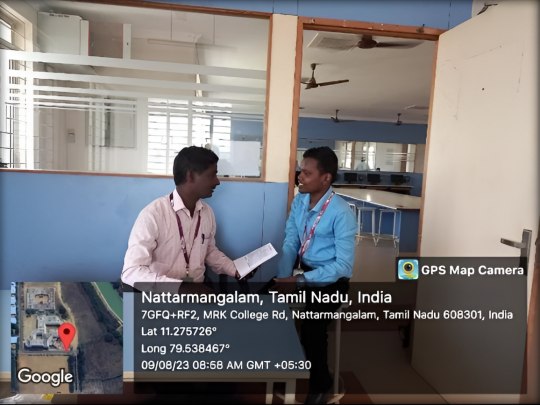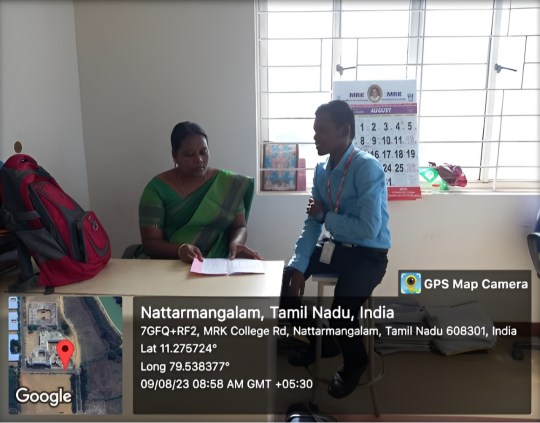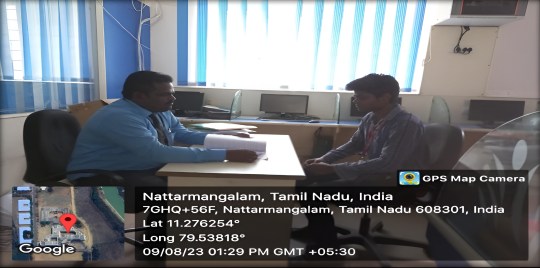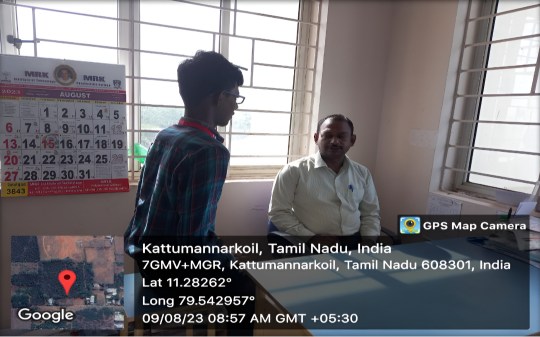
MENTORING/COUNSELING PROCESS
1
Allocation of mentor to a group of 15 students
2
Keep track of each student's profile in the
required Track Records format.
3
Provides advice to students on choosing a
project topic, project guidelines, and courses they should not be
allowed to take.
4
Report student cases that have not been
resolved to the head of department (HOD), who may then bring the
cases to the attention of higher authorities if necessary.
5
Even after they graduate, stay in touch with
students.
6
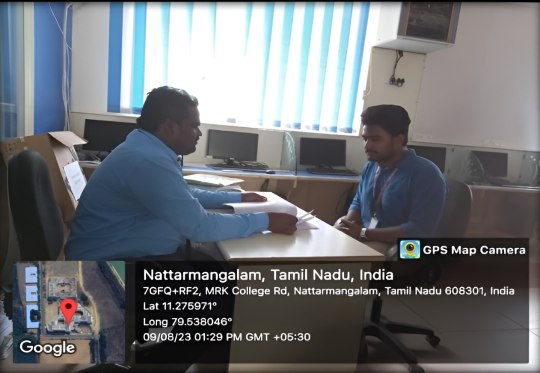
Regular mentoring/counseling sessions and
maintenance of Student Performance Report (SPR).
7
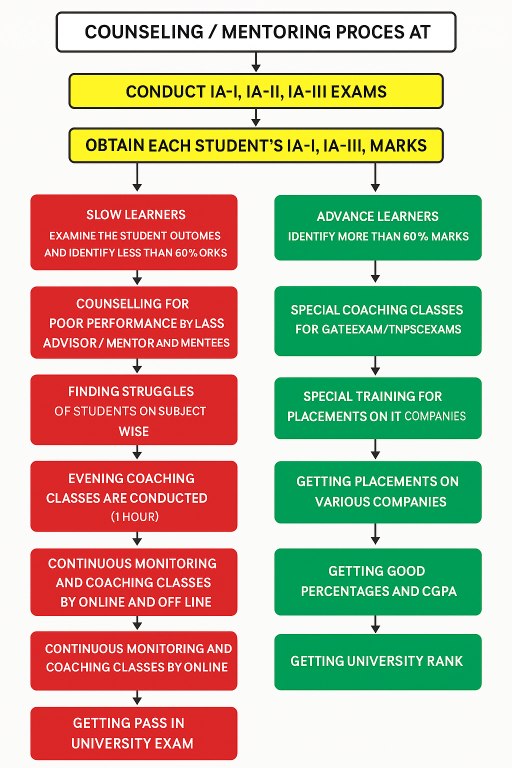
Identification of slow/fast learners based on
initial test scores.
8
Remedial classes and counseling sessions held
for slow learners to improve their performance.
9
Encouragement given to fast learners to
achieve higher levels through online courses like NPTEL.
10
Keeps track of complaints, problems, and
absenteeism.
11
Explains to kids the laws and regulations of
academics.
12
Obtains each student's IA-I, IA-II, IA-III,
and university results for every semester.
13
Each student's attendance for all classes is
tracked monthly by the CMS.
14
Within a week of the results being released,
examine the student outcomes and offer advice for poor performance.
15
Communicates at least twice during a semester
with parents of children to discuss academic performance, attendance
difficulties, and future plans.
16
Gives students detailed instructions on how to
choose elective courses during registration.
17
Provides advice and details to help in
internship planning.
18
Ensures that resources are available for
advanced coursework or advanced study.
SPECIAL LECTURE PROGRAMMES FOR TECHNICAL SUBJECTS
Gallery