Purpose
To regulate water conservation, sustainable management and utilisation of water resources effectively.
Policy Details
The objectives of the policy:
- Ensure continuous water supply – The Institute ensures adequate and reliable water supply by implementing continuous transmission and automated distribution systems throughout the campus.
- Reduce wastage of water – Inside the Institution, Water wastage is reduced by checking and sealing the leaks, placing pressure reducing valves, flow restrictors and aerator taps on necessary locations.
- Recycle the waste water – The Institute (water recycling or water reclamation) reclaims the water from a variety of sources then treats and reuses it for beneficial purposes such as irrigation, groundwater replenishment, gardening, and environmental restoration. Water reuse can provide alternatives to existing water supplies and be used to enhance water security, sustainability, and resilience.
- Rain water harvesting – The Institution collects rain water from a roof-like surface and redirects it to a tank, a deep pit, a well, and a borehole to reach the water table through percolation, so that it seeps down and restores the ground water. The Institution has roof top rainwater harvesting which is used to provide drinking water, domestic water, water for livestock, and a way to replenish groundwater levels.
- Treat effluents from laboratories – The Institution follows Standard Operating Procedures for disposal of hazardous chemicals collected from the laboratories.
- Sewage Treatment Plant process – The Institute has a Sewage treatment plant to recycle the waste water. This plant treats the waste water and makes it fit for reuse in watering plants and trees. Also to protect the surrounding environment from raw sewage discharge.
- Store water – The institute has storage structures to avoid occurrences of water scarcity and to store excess runoff during period of heavy rain.
- Awareness about Water Conservation – The awareness program has been organised at all levels of the society about the importance of saving water and to cope with its scarcity and ensure sustainability, the Institution conducts awareness programmes to students to improve water conservation.
1. Rain water harvesting
Urbanization Overexploitation of groundwater and surface water resources due to decreased water quality. Meanwhile, the rainwater harvesting system investigates new water sources. The current goal is to use rainwater and thus get closer to the concept of nature conservation. In the rainwater harvesting system is analyzed as an alternative water source at the MRK institute of technology campus, Kattumannarkoil.
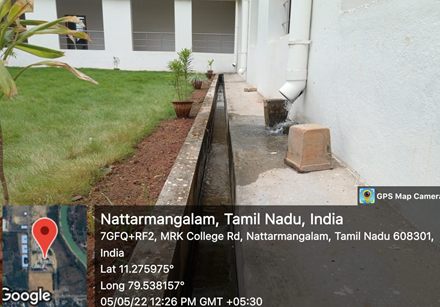
Rain Harvesting System
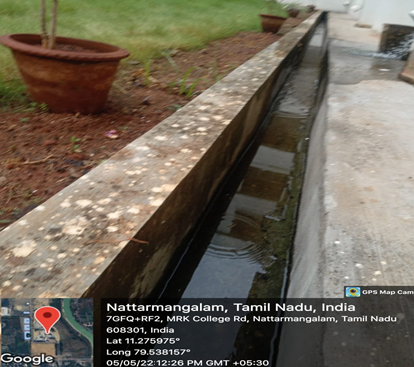
Water Collection
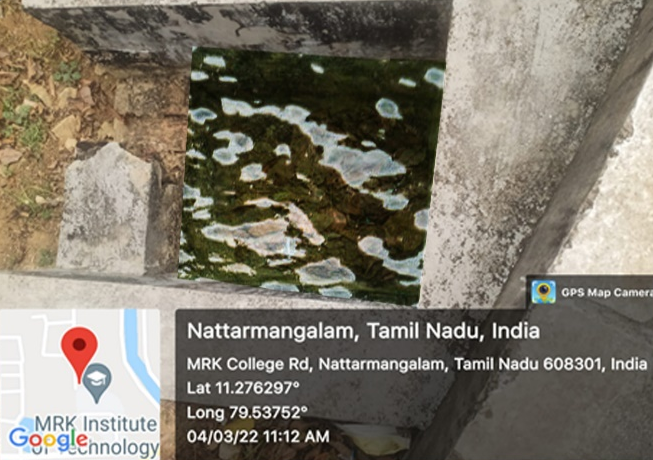
Harvesting Facility
2. BORE WELL / OPEN WELL RECHARGE
Water source at the MRK institute of technology campus, Kattumannarkoil. College population around 2000 and water needs of 220996 Lit / day. This water requirement can be met through a rainwater storage project. The rainwater on the roof is used to collect the water in the pipes. Double rain filters are supplied to the downspout for filtration purposes.
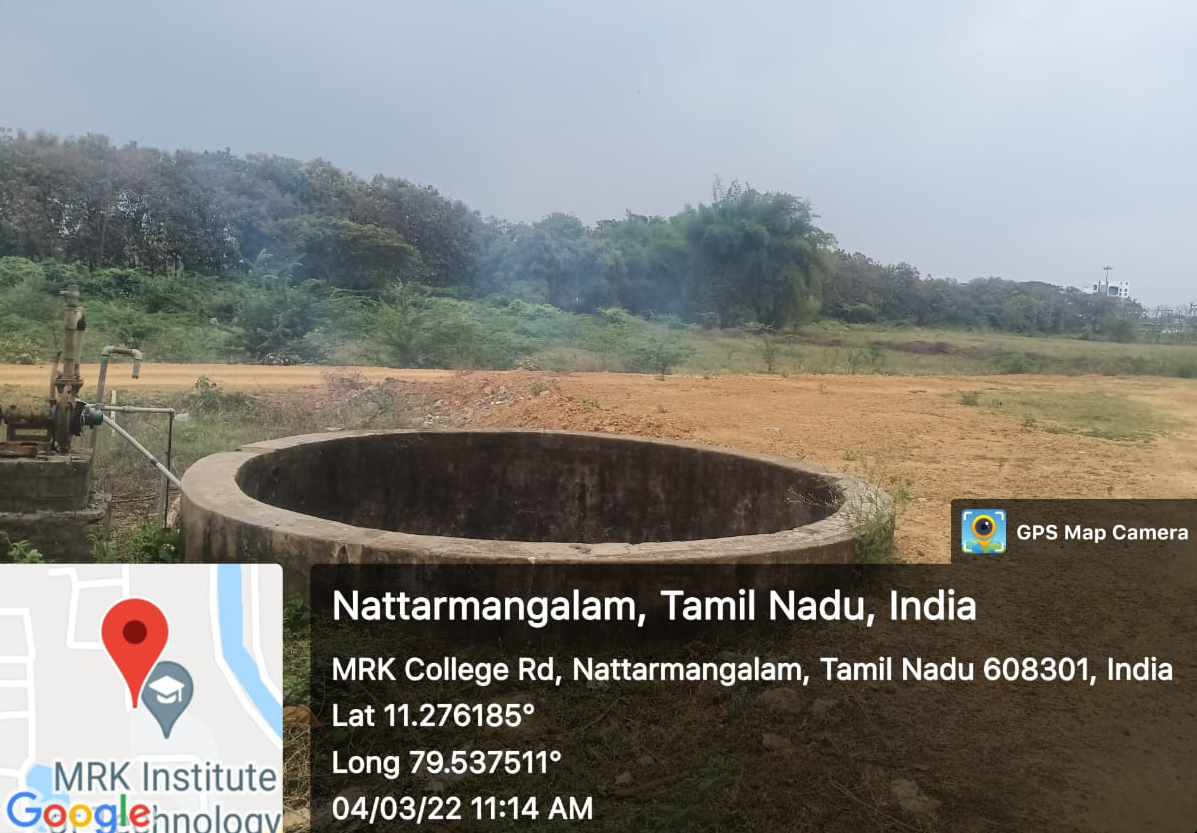
Bore Well Recharge System
3. CONSTRUCTION OF TANKS AND BUNDS
As the water crisis continues to become severe, there is a dire need of reform in water management system and revival of traditional systems. As a part of revival to traditional wisdom, in this institute we built 3 Nos of ground tanks to collect and storage the rainwater for reuse on-site, rather than allowing it as run off.
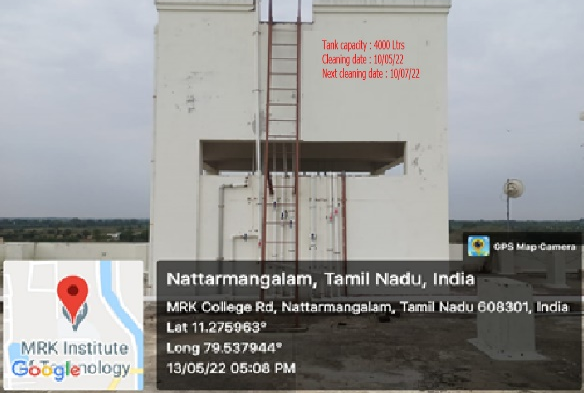
Storage Tanks
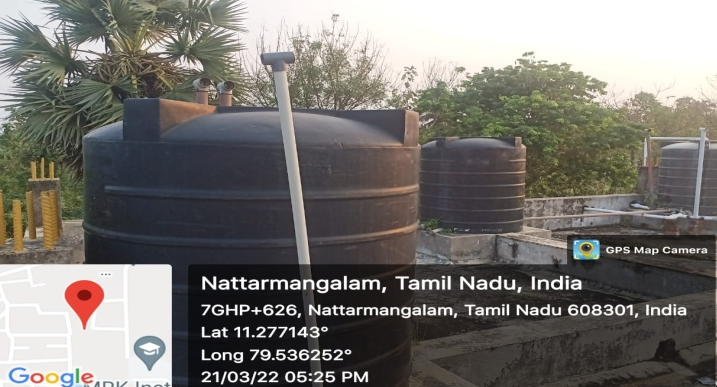
Tank Facilities
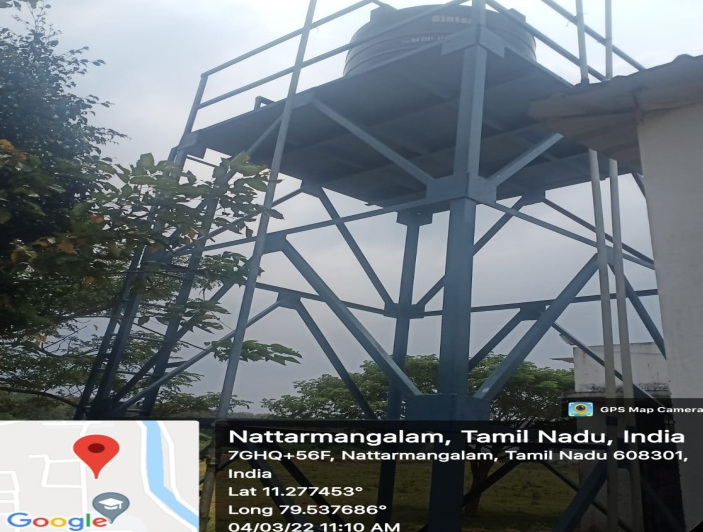
Water Storage Bunds
4. WASTE WATER RECYCLING
Decentralized Waste Water Treatment System (DEWATS)
In this institute, separate hostels are constructed and these are accommodating around 700 boys and 300 girls. Almost 40,000 liters of water demand is for these hostels for smooth functioning. Total water demands is being meet extract from ground water through bore wells and these are recharged with ground tanks and harvesting pits. Total waste water produced from these hostels treated with centrally constructed decentralized waste water treatment plant. The waste water after treatment is proposed to be utilized effectively for gardening purpose. This will incidentally drastically reduce the usage of fresh water. Detailed drawings and approximate estimate of DEWATS system is attached for information.